
Rejoicing in the Parched Land
-
 December 10, 2025
3rd Sunday of Advent - Isaiah 35:1-6a, 10
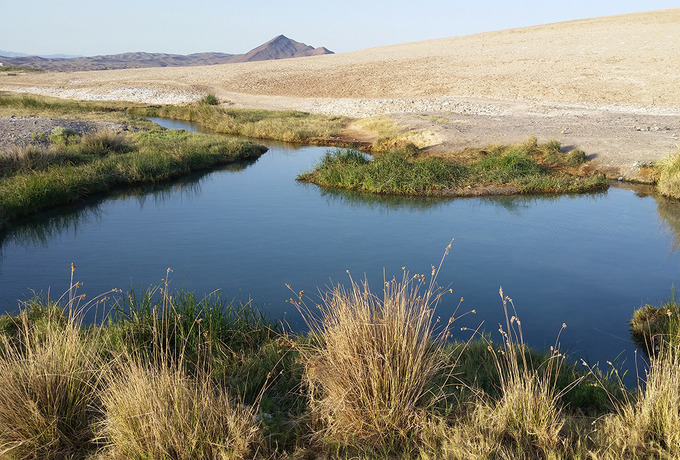
The desert and the parched land will exult;
the steppe will rejoice and bloom.
They will bloom with abundant flowers,
and rejoice with joyful song.
The glory of Lebanon will be given to them,
the splendor of Carmel and Sharon;
they will see the glory of the LORD,
the splendor of our God.
Strengthen the hands that are feeble,
make firm the knees that are weak,
say to those whose hearts are frightened:
Be strong, fear not!
Here is your God,
he comes with vindication;
with divine recompense
he comes to save you.
Then will the eyes of the blind be opened,
the ears of the deaf be cleared;
then will the lame leap like a stag,
then the tongue of the mute will sing.
Those whom the LORD has ransomed will return
and enter Zion singing,
crowned with everlasting joy;
they will meet with joy and gladness,
sorrow and mourning will flee.
On this Gaudete Sunday, our first reading is spilling over with joyful imagery. Isaiah speaks of various facets of nature known for sterility suddenly teeming with life. He speaks of frail and fragile human faculties being strengthened and renewed. What causes this joyful fecundity and strength? It is the sight of “the glory of the Lord, the splendor of our God.” The Lord appears, and he comes to save. That is the Spirit’s message for us this week.
When Isaiah wrote these words of comfort to God’s people, they were staring down a seventy-year exile in Babylon. It looked like the end of the Lord’s promises, the end of his patience, indeed the end of his mercy. In the face of that daunting reality, the Lord reminded them again that even though he allows bad things to happen, even the natural consequences of our sins, he will restore them when “those whom the Lord has ransomed will return and enter Zion (aka Jerusalem) singing.” This prophecy was initially fulfilled in 538 B.C. when Cyrus the Great of Persia pronounced an edict financing the return of the Jewish nation to rebuild Jerusalem. God indeed works in history. This prophecy still awaits its ultimate fulfillment when Jesus returns to establish everlasting Messianic peace.
While the promised peace awaits its ultimate fulfillment, it is available to us now. Not an external, political and interpersonal peace. That will come. Right now the Lord offers us an interior peace. You see, for Isaiah and for the entire biblical tradition, the desert has always been as much a spiritual place as it is a physical one. The hardened, dried out desert is my hardened and dried out heart. It is my pride and hypocrisy and spiritual deafness and blindness. And it’s yours too. That is precisely where Isaiah says that the Lord will show up, ready to save, bringing new life. Sure, Advent is a time of waiting, but this is a promise that Jesus does not want to wait on. Advent is an invitation to each of us to open our hardened hearts to the only Messiah there is, the one who wants to come right now, not just in a couple of weeks. Perhaps it is not we who are waiting for him but he who is waiting for us.
St. John Paul the Great once said, “It is Jesus that you seek when you dream of happiness; He is waiting for you when nothing else you find satisfies you.” When John the Baptist’s disciples questioned Jesus as to whether or not he was the long awaited Messiah, Jesus pointed to his miracles and quoted this passage from Isaiah directly. John the Baptist sought him. The Judah of Isaiah's day sought him. Whether or not we realize it, you and I are seeking him too.
If you are in an especially dry season, the Spirit wants you to rejoice because restoration is coming. If you are in a fruitful place and rejoicing is easy for you right now, praise God for that, but realize that he wants even more joy for you. If you are like me and you are somewhere in the middle, the Spirit invites you to rejoice and to remember that he has worked in history, in your own history in fact, and he has promised to keep working.